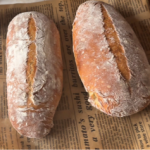
Rustic French Bread
This Rustic French Bread is made with just five simple ingredients and delivers a crisp golden crust with a soft, airy crumb. It's an easy homemade bread recipe that's perfect for beginners and ideal for sandwiches, soups, or serving with butter.
Ingredients
- 375 g Bread flour
- 260 g Warm water
- 8 g Salt
- 2 g Active dry yeast
- 5 g Sugar (1 tsp)
Instructions
- Combine the warm water, active dry yeast, and sugar in a large bowl. Stir gently and let the mixture sit for 5–10 minutes until it becomes foamy, indicating the yeast is active.
- Add the bread flour and salt to the yeast mixture. Stir until all the flour is hydrated and a rough, shaggy dough forms with no dry patches remaining.
- Knead the dough using a stand mixer with a dough hook for 6–8 minutes or by hand for 8–10 minutes until it becomes smooth, elastic, and slightly tacky.
- Cover the bowl with a clean towel or plastic wrap and let the dough rest for 30 minutes. This allows the flour to fully absorb the water and makes the dough easier to handle.
- Perform one gentle stretch and fold by lifting one side of the dough and folding it over itself. Rotate the bowl and repeat on all sides to build strength and improve the bread's structure.
- Cover the dough again and leave it in a warm place for 1½–2 hours, or until it has doubled in size.
- Transfer the dough onto a lightly floured surface and divide it into two equal portions. Shape each piece into a rustic oval or baguette-style loaf, taking care not to press out too much of the trapped air.
- Place the shaped loaves on a parchment-lined tray or proofing cloth and let them rise for 30–45 minutes until slightly puffy.
- Using a sharp bread lame or knife, make one long slash down the centre of each loaf. This helps the bread expand evenly while baking.
- Preheat the oven to 240°C (465–475°F). Just before placing the bread inside, carefully pour 15 ml of water into the hot oven to create steam. Immediately place the loaves inside and bake for 22–26 minutes, or until they are deep golden brown and sound hollow when tapped on the bottom. Cool completely on a wire rack before slicing.