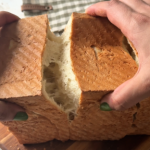
Japanese Shokupan Bread
This Japanese Shokupan is incredibly soft, fluffy, and light thanks to the Tangzhong technique. Baked in a Pullman loaf pan, this homemade milk bread stays fresh for days and is perfect for sandwiches, toast, or French toast.
Ingredients
For Tangzhong:
- ½ cup Whole milk (120 g)
- 3 tbsp All-purpose flour (24 g)
For Dough:
- Cooled Tangzhong
- ¾ cup Whole lukewarm milk (180 g)
- 2½ tsp Active dry yeast (7–8 g)
- 3½ tbsp Sugar (45 g)
- 1 Large egg (≈50 g)
- 2 ¾ cups All-purpose flour (350 g)
- 1 tsp salt (6 g)
- 4 tbsp Softened unsalted butter (56–58 g)
Instructions
- First, combine the whole milk and flour in a small saucepan, whisking until completely smooth with no lumps remaining. Place the saucepan over medium-low heat and stir continuously until the mixture thickens into a smooth, glossy paste similar to pudding. Once thickened, transfer it to a bowl and allow it to cool completely before using.
- Meanwhile, combine the lukewarm milk, sugar, and active dry yeast in a large mixing bowl. Stir gently and allow the mixture to rest for 5–10 minutes until it becomes foamy and bubbly, indicating that the yeast is active.
- Next, add the cooled Tangzhong and the egg to the activated yeast mixture, stirring until fully combined. Gradually add the flour and salt, mixing until a rough, shaggy dough forms and all of the flour is hydrated.
- Transfer the dough to a stand mixer fitted with a dough hook or knead by hand. Gradually incorporate the softened butter, adding a little at a time while continuing to knead. Keep kneading until the dough becomes silky, smooth, elastic, and slightly tacky. It should pass the windowpane test when fully developed.
- Place the dough into a lightly greased bowl and cover it with plastic wrap or a damp towel. Allow it to rise in a warm place for 45–60 minutes, or until doubled in size.
- Gently punch down the risen dough to release excess air. Shape it into a tight log, making sure to create good surface tension. Carefully place the shaped dough into a well-greased Pullman loaf pan.
- Cover the pan loosely and allow the dough to rise again until it reaches approximately ½–1 cm below the Pullman lid. This ensures the bread expands perfectly during baking without overflowing.
- Preheat the oven to 175°C (350°F). Slide the Pullman lid closed and bake the loaf for approximately 35 minutes. If needed, uncover the loaf during the final few minutes to achieve a deeper golden colour on top.
- Finally, remove the loaf from the oven and allow it to cool in the pan for about 10 minutes. Carefully remove it from the pan and transfer it to a wire rack to cool completely before slicing. Cooling completely helps maintain its soft texture and prevents the crumb from becoming gummy.