Ciabatta Bread
About the recipe
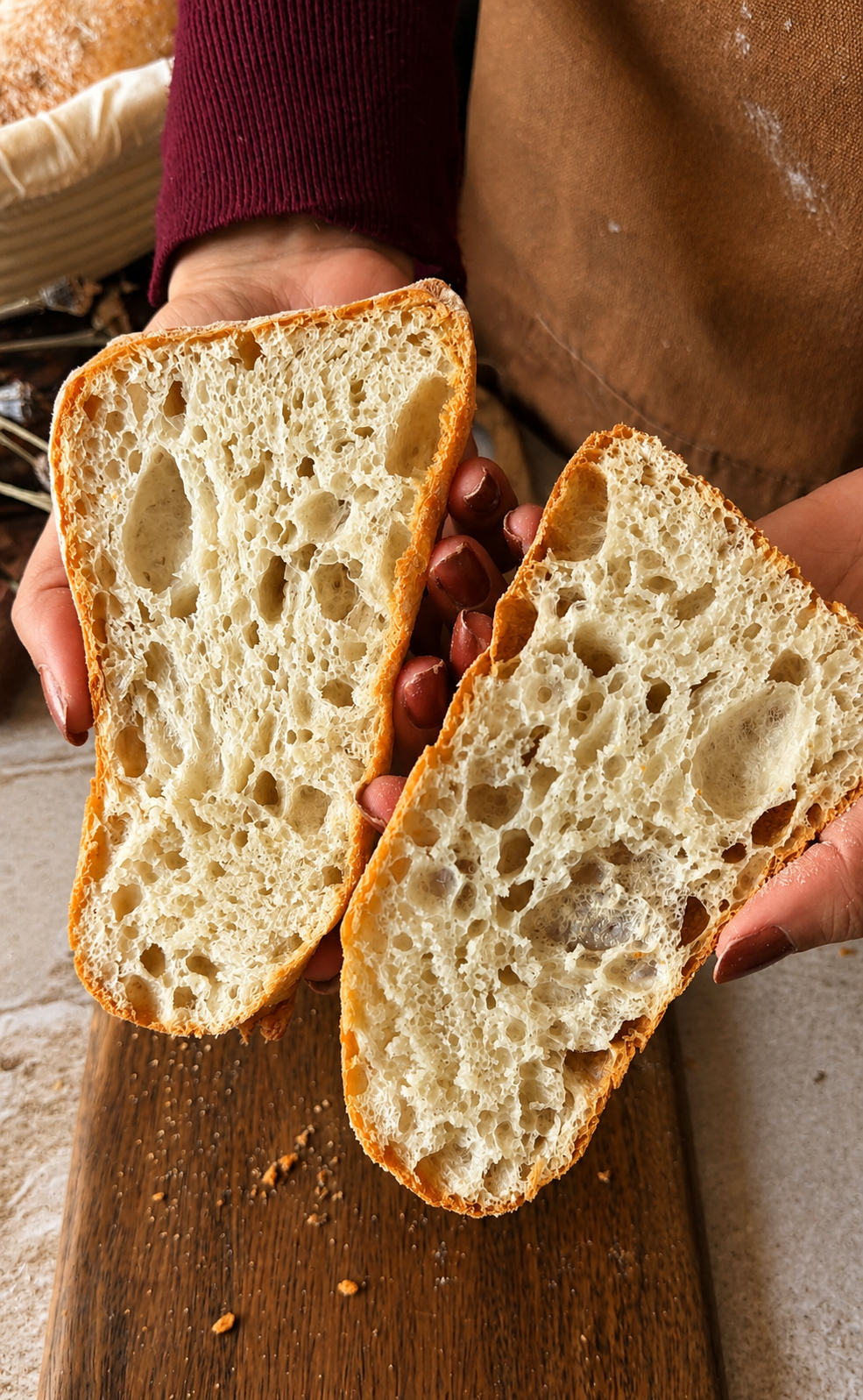
Rustic, light, and beautifully airy, this Homemade Ciabatta Bread is everything you love about artisan bakery bread. It features a crisp golden crust, a chewy interior, and those signature large air pockets that make ciabatta so irresistible. The best part is that although the dough is highly hydrated, the stretch-and-fold method makes it surprisingly beginner-friendly. With an optional cold fermentation, you’ll develop an even deeper flavour and an incredibly light crumb that rivals any bakery loaf.

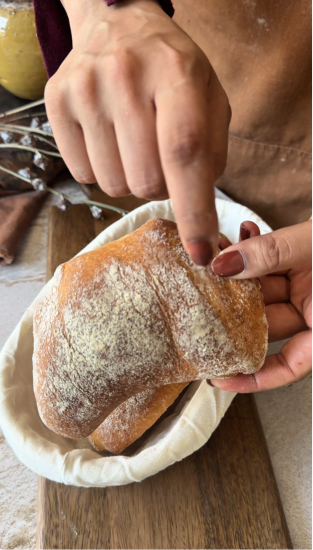
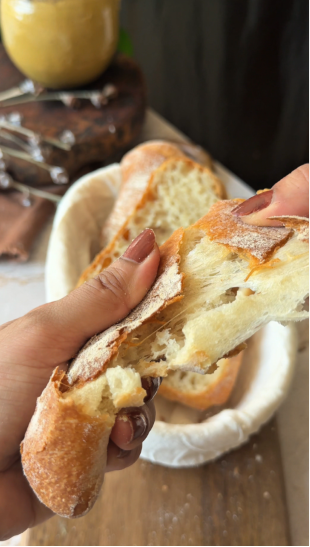
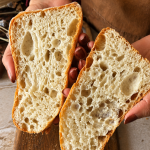
Ciabatta Bread
Ingredients
- 240 g Bread flour (12% protein)
- 3.5 g Instant dry yeast
- 165 ml Warm water (about 35–40°C)
- 1 ½ tsp Sugar
- 1 tsp Salt (about 5–6 g)
- 21 g Neutral oil (such as vegetable or canola oil)
- All-purpose flour (for dusting)
Instructions
- Combine the warm water, instant yeast, and sugar in a mixing bowl, then let the mixture rest for 5–10 minutes until the yeast becomes slightly foamy and activated.
- Next, add the oil and salt, then gradually mix in the bread flour until all the flour is hydrated and a soft, sticky dough forms with no dry patches remaining.
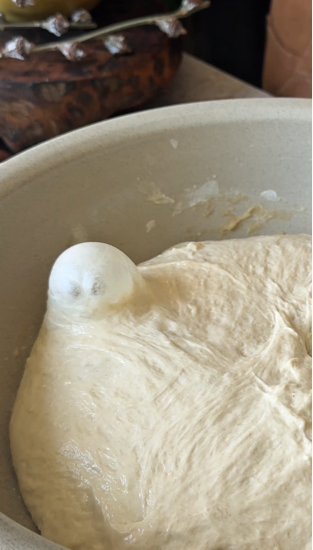
- Cover the bowl and allow the dough to rest for 30 minutes. Then perform one round of stretch and folds by folding all four sides of the dough toward the center. Rest for another 30 minutes and repeat this process two more times, completing a total of three rounds until the dough becomes smooth, elastic, and stronger.
- Cover the dough tightly and refrigerate for 24, 48, or up to 72 hours. All of these fermentation times produce excellent results, with longer fermentation developing a richer flavor and a lighter, airier crumb. When ready to bake, remove the dough from the refrigerator and let it come to room temperature for 1½–2 hours before baking. If you prefer to skip the cold fermentation, let the dough rise at room temperature until doubled in size, about 1½–2 hours, then bake.
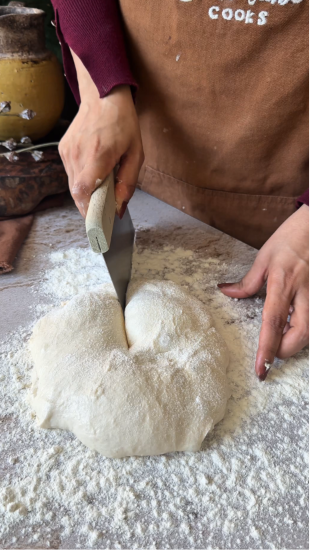
- Gently transfer the dough onto a lightly floured surface, divide it into four equal portions, and carefully shape each piece into a rustic ciabatta loaf without pressing out the trapped air bubbles. Lightly dust the tops with flour.
- Meanwhile, preheat the oven to 225°C with a pizza steel or baking stone inside if using. Place a small oven-safe dish on the bottom rack and carefully pour in about 100 ml hot water just before baking to create steam.
- Carefully transfer the shaped loaves onto the hot baking surface or a baking tray, then bake for 20–25 minutes until the crust is deeply golden brown, the loaves sound hollow when tapped underneath, and the internal temperature reaches 96–98°C.
- Finally, transfer the baked ciabatta to a wire rack and allow it to cool for 20–30 minutes before slicing to achieve the best texture and crumb.
Video
Tips & Tricks
Use Bread Flour for the Best Texture: Bread flour with a higher protein content develops stronger gluten, giving your ciabatta its characteristic chewy texture and large air pockets.
Don’t Be Tempted to Add Extra Flour: The dough is intentionally sticky. Although it may seem difficult to handle initially, resist adding extra flour, as this can make the bread dense instead of light and airy.
Stretch and Folds Are Better Than Heavy Kneading: Instead of traditional kneading, the stretch-and-fold technique gradually builds gluten while preserving the dough’s high hydration. This creates the signature open crumb ciabatta is famous for.
Cold Fermentation Makes a Huge Difference: Although optional, refrigerating the dough for up to 72 hours dramatically improves both flavour and texture, giving the bread a more complex taste and lighter interior.
Create Steam for a Crisp Crust: Adding steam during the first part of baking helps the dough expand fully while creating the beautifully crisp artisan crust found in bakery-style ciabatta.
FAQs
Can I skip the cold fermentation?
Yes. Although a 72-hour cold fermentation creates the best flavor and texture, you can bake the bread after the dough has fully risen if you’re short on time.
Why is my ciabatta dough so sticky?
Ciabatta is naturally a high-hydration dough. The sticky consistency is what creates the large air pockets and soft, chewy crumb after baking.
Can I bake ciabatta without a pizza steel?
Absolutely. While a pizza steel helps create an extra crispy bottom crust, a regular baking tray or baking stone also works well.
How do I know when the ciabatta bread is fully baked?
The crust should be deep golden brown, the loaf should sound hollow when tapped underneath, and the internal temperature should reach approximately 96–98°C.
Can I add herbs or cheese?
Yes. Fresh rosemary, roasted garlic, olives, sun-dried tomatoes, or grated Parmesan make delicious additions without changing the overall method.
How should I store homemade ciabatta bread?
Store the ciabatta bread in a paper bag or loosely wrapped at room temperature for up to 2 days. For longer storage, freeze individual loaves for up to 2 months and reheat in the oven until crisp.